
Loading...
Serving Fontana, CA and surrounding areas. (909) 587-5725
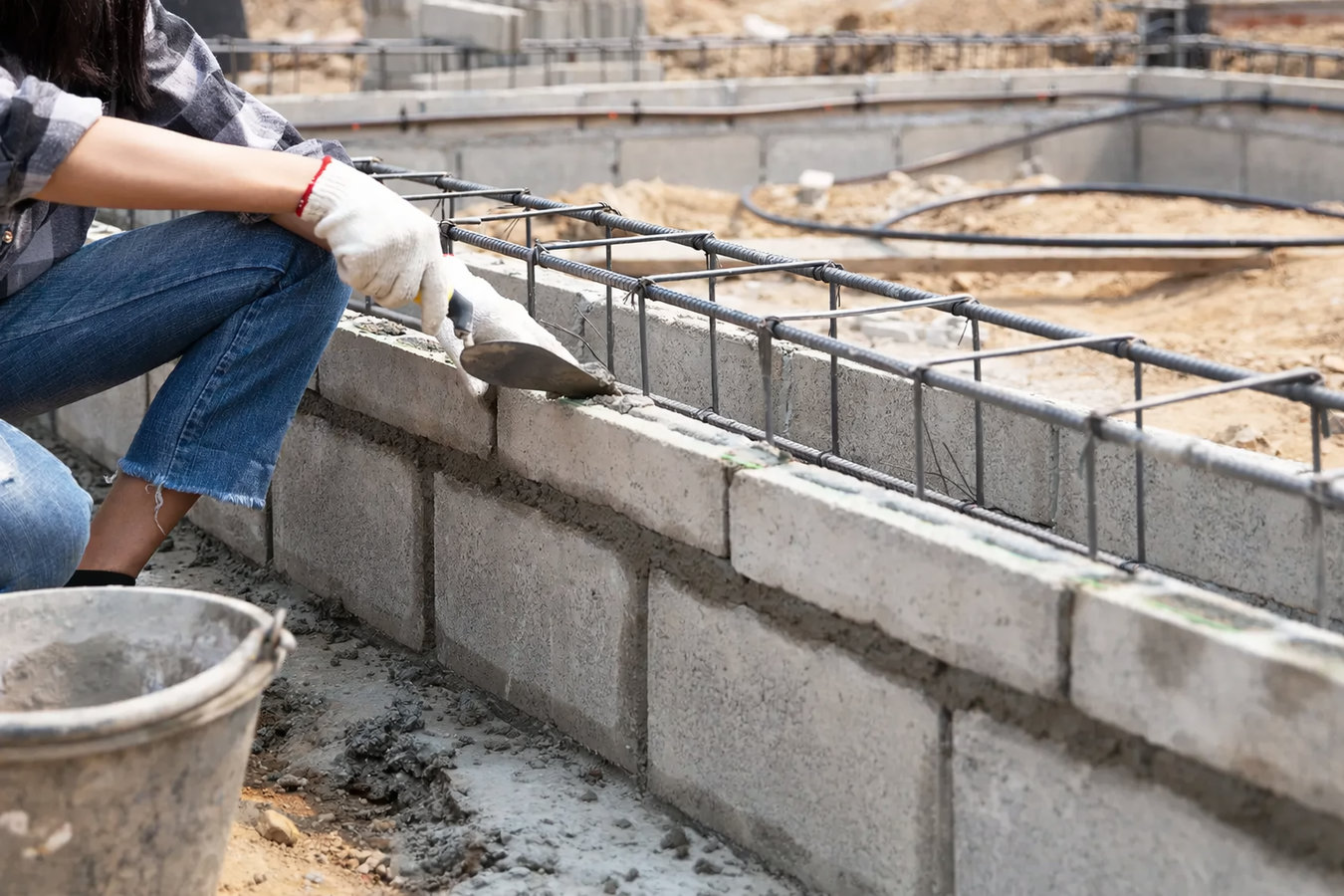
ADU foundations, room additions, and structural walls built with seismic-grade steel and footings designed for Fontana's clay soils - fully permitted and ready for the next phase.
Foundation block wall installation in Fontana means pouring a concrete footing, then stacking hollow concrete masonry units with steel rods through the cores and filling every core with grout - most standard residential walls take three to seven days of active construction once the permit is in hand, plus two to four weeks for City of Fontana permit approval before work begins. Every load-bearing wall here requires seismic reinforcement and passes a city inspection before it is covered up.
Fontana homeowners call about foundation block walls most often when they are adding an ADU, converting a garage, or building a room addition - projects where nothing else can move forward until the foundation is in. The soil here is clay-heavy, which means footings have to be designed for seasonal movement, not just vertical load. A foundation built without accounting for that will show cracks within a few years, no matter how solid the framing above it looks.
Foundation walls often connect to other structural masonry work. When a project calls for it, we coordinate foundation block wall installation with outdoor kitchen masonry and foundation repair on the same schedule, so you are not waiting on separate contractors to sequence their work.
If you are adding a room, a garage, or a backyard dwelling unit to your Fontana property, you almost certainly need a new foundation before any framing can begin. The structure above has to sit on something solid, and in most cases that means a block wall foundation built to current code. This is the most straightforward reason to call - the project cannot move forward without it.
Walk around the base of your home or any attached structure and look for cracks wider than a pencil line, sections of wall that bow outward, or mortar joints that are crumbling and falling out. These are signs the wall is under stress - possibly from Fontana's clay-heavy soil shifting with the seasons - and may need to be rebuilt or reinforced before the problem gets structural.
In Fontana's hot, dry summers, clay soil can shrink and pull back from the base of a wall, leaving a visible gap. When the rains return, that same soil swells and pushes against the structure. Over several cycles, this push-and-pull can crack or shift a foundation wall. If you notice that gap appearing each summer, it is worth having a masonry contractor take a look before the damage becomes structural.
If doors that swung freely are now sticking, or if you notice new gaps forming at the corners of window frames, a slightly shifted foundation is sometimes the cause. This kind of movement is gradual and easy to dismiss, but in an area with active soil like Fontana, it can be an early sign that the foundation wall below is under stress. A masonry contractor can assess whether the foundation is the source.
We build new foundation block walls for ADUs, room additions, garage conversions, and detached structures throughout Fontana. Every new wall starts with a concrete footing designed for local soil conditions, steel rods through the hollow block cores, and grout filling every core before inspection. For ADU projects - which are in high demand across Fontana right now - we handle the permit application, attend the required city inspections, and keep the foundation phase on schedule so your framing crew is not waiting on us. We also rebuild existing foundation walls that have cracked, shifted, or failed due to soil movement. When a project involves more than just the foundation, we coordinate with our outdoor kitchen masonry work and, where needed, with foundation repair on the same project to keep things moving.
The quality you can actually see after the job is done: a wall that runs perfectly level and plumb, uniform mortar joints fully filled with no gaps, and a top course clean enough to pass a city final inspection without punchlist items. The quality you cannot see is the part that actually matters - the right footing depth for your soil, the right amount of steel for a seismic zone, and grout poured correctly in Fontana's heat so it cures to full strength instead of drying too fast.
Suits homeowners building a backyard dwelling unit who need a code-compliant, permitted block wall foundation before framing can begin.
Suits homeowners expanding living space who need a new structural base connected to or extending the existing home foundation.
Suits homeowners building a detached garage, workshop, or storage structure that requires a block wall foundation for code compliance.
Suits homeowners whose existing foundation wall has cracked, shifted, or been undermined by soil movement and needs to be replaced.
Fontana is in a high seismic hazard area within San Bernardino County. California's building code requires additional earthquake-resistant features in any load-bearing masonry wall here - more steel reinforcement inside the wall and stricter inspection requirements. The city inspector will verify that the rebar is in place and properly spaced before the grout is poured and everything is covered up. Beyond seismic requirements, much of Fontana sits on clay-heavy soil that swells in winter and shrinks in summer. That seasonal movement puts pressure on footings that a contractor unfamiliar with this area may underestimate - and a footing that is too shallow or too narrow for local conditions is the leading cause of foundation wall failures we see when homeowners call us to assess existing damage. Fontana has also seen a significant ADU construction surge, driven by California's statewide push to add housing. Masonry contractors here are often booked four to eight weeks out during peak season, so early planning matters.
The City of Fontana's permit and inspection process adds time to any foundation project that homeowners need to plan for - typically two to four weeks between permit submission and approval, and sometimes longer if the project requires a soils report or structural engineering drawings. We work in Fontana regularly and know the process. We also serve homeowners in Victorville and Rialto, where similar soil and seismic conditions apply to foundation work.
We visit your property in person - photos alone cannot show soil conditions, access constraints, or what is already there. Expect 30 to 60 minutes on site and a written estimate within a few days. We reply to all inquiries within one business day.
Once you sign an agreement, we submit the permit application to the City of Fontana. Some projects require structural engineering drawings before the permit is approved - we will tell you upfront if yours does. Plan for two to four weeks between submission and approval.
We excavate to the depth required for your footing - typically 12 to 24 inches in Fontana - pour the concrete base, and wait for the city inspector to sign off before laying a single block. In summer, we wet-cure the footing to prevent it from drying too fast in the heat.
Blocks are laid level and plumb, steel rods placed through the cores, and the cores filled with grout before a second city inspection. After the final inspection sign-off, we clean up the site. The wall needs about 28 days to reach full strength before you backfill or load it.
We handle the permit, schedule around the city inspections, and give you a written estimate after seeing the site - no ballpark numbers over the phone.
(909) 587-5725We submit the application, coordinate the required city inspections, and hand you the final permit documentation. A lot of homeowners in Fontana have been burned by contractors who skipped permits - unpermitted foundation work creates real problems when you sell or refinance. We pull every required permit, every time.
Much of Fontana's housing stock sits on expansive clay that moves with the seasons. We size and depth every footing based on actual site conditions, not a standard spec. A footing designed for Fontana's soil profile is what separates a wall that holds for decades from one that starts cracking within a few years.
Every load-bearing wall we build in Fontana includes the steel and grout that California's seismic requirements demand. We do not treat this as an upsell - it is how every wall gets built here. The city inspector confirms the steel placement before it is covered up, so you have independent verification the work was done right.
Fontana has seen a significant ADU construction surge, and masonry contractors book out fast in spring and summer. We staff ADU foundation jobs to stay on schedule so your framing crew is not waiting on us. We give you a realistic start date before you sign anything - not an optimistic one we have to revise later. Learn more about ADU requirements at the California Department of Housing and Community Development.
Every wall we build is designed for Fontana's specific conditions - the soil, the seismic zone, and the city permit process. When the inspector signs off and we leave the site, you have documentation that the foundation was built right and a wall ready to support whatever comes next.
More questions? The City of Fontana Building and Safety Division publishes permit requirements and inspection schedules. The Masonry Institute of America covers seismic design standards for masonry in Southern California. California ADU regulations are outlined by the California Department of Housing and Community Development.
Permanent masonry outdoor kitchens built on a properly prepared foundation - often a natural follow-on once the foundation wall phase is complete.
Learn moreAssessment and repair of existing foundation walls that have cracked, shifted, or been undermined by soil movement over time.
Learn moreMasonry contractors in Fontana book out fast this season - reach out now for a site visit and a written estimate before your project timeline slips.